
Search Engine Optimization (SEO) is the practice of optimizing a website to earn higher organic visibility and rank prominently in search engine results like Google. Instead of paying for ad space, SEO builds sustainable visibility by aligning site structure, technical performance, and digital content with search intent. The process revolves around three foundational pillars: on-page SEO, which ensures content is relevant, informative, and keyword-aligned; technical SEO, which focuses on fast load speeds, mobile responsiveness, and clean crawlability; and off-page SEO, which builds site authority through reputable backlinks and digital brand mentions. In today's digital landscape, modern search engines also evaluate user experience, topical depth, and semantic context. By establishing topical authority and solving user needs directly, a robust SEO strategy drives compounding, qualified web traffic, boosts conversion rates, and builds long-term brand credibility without ongoing advertising costs.By establishing topical authority and solving user needs directly, a robust SEO strategy drives compounding, qualified web traffic, boosts conversion rates, and builds long-term brand credibility without ongoing advertising costs.
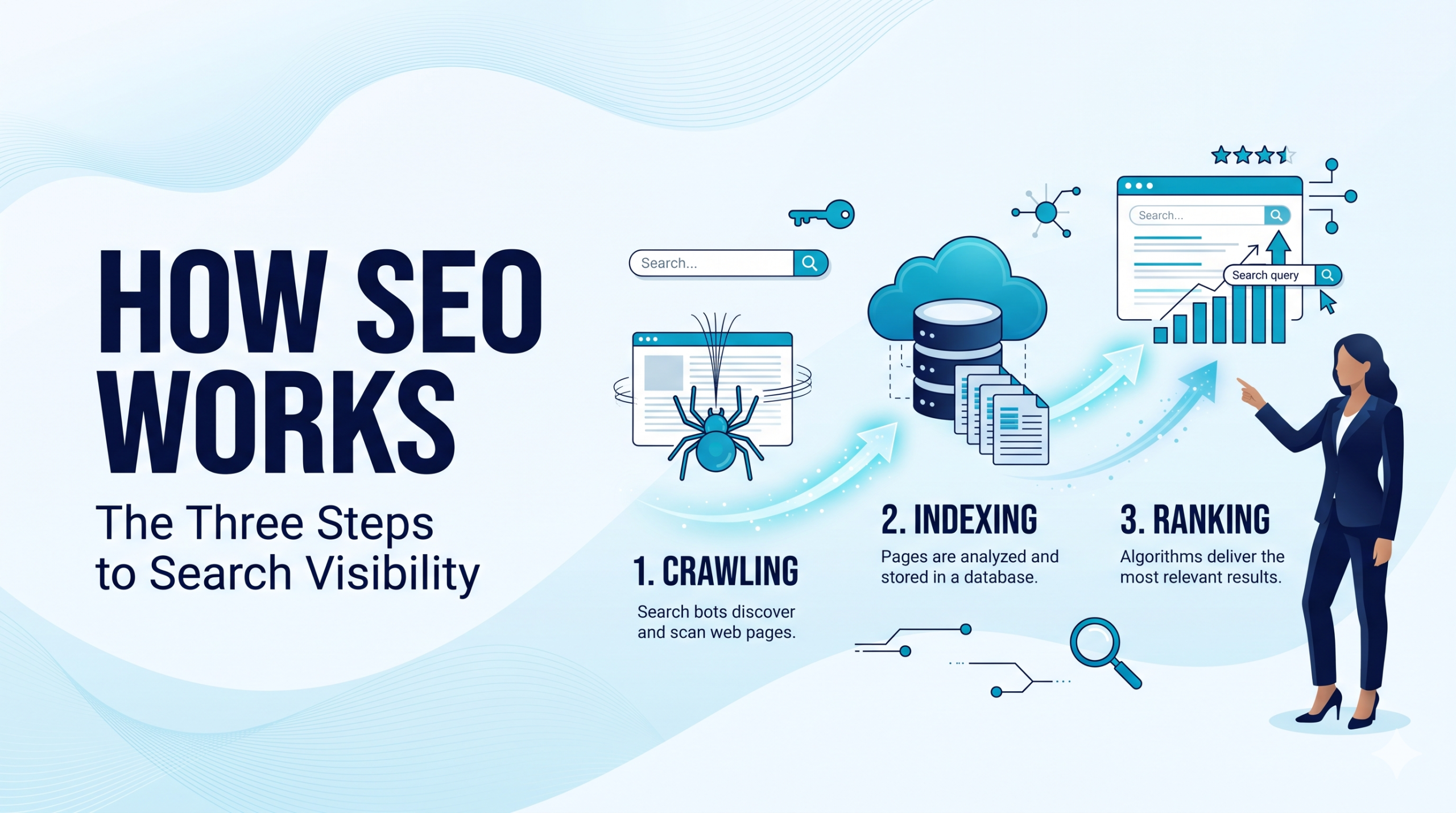
Search Engine Optimization (SEO) operates through a systematic process where search engines discover, evaluate, and rank web content to satisfy user queries. It begins with crawling, where automated search engine bots (spiders) scan the internet, following links to discover new and updated web pages. These crawled pages are then processed and stored in a colossal database during the indexing stage, where the engine analyzes the page’s code, structure, readability, and media. Finally, when a user enters a search query, complex mathematical algorithms execute the ranking phase in milliseconds, evaluating hundreds of signals to deliver the most authoritative and relevant results. These ranking signals fall broadly into three operational categories: on-page factors (keyword alignment, comprehensive topical depth, and structured headings), technical factors (fast loading speeds, mobile responsiveness, secure HTTPS encryption, and clean crawl architecture), and off-page factors (domain trustworthiness earned through quality external backlinks and digital citations). Modern search engines also leverage machine learning and natural language processing to decode semantic context and user intent. Ultimately, SEO works by continuously optimizing these interconnected technical, content, and authority layers so algorithms recognize your website as the definitive, highest-value answer to a user's search.
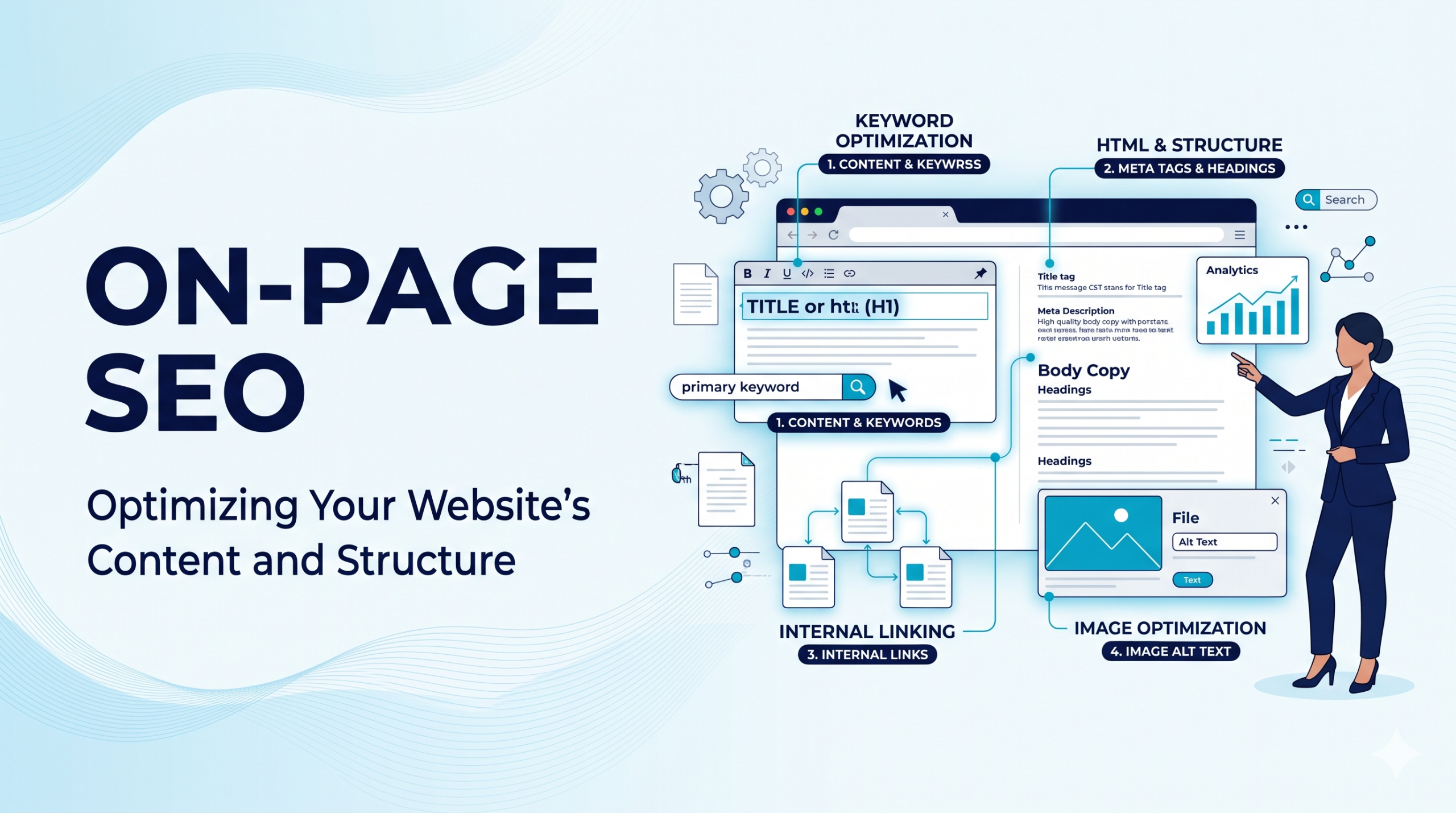
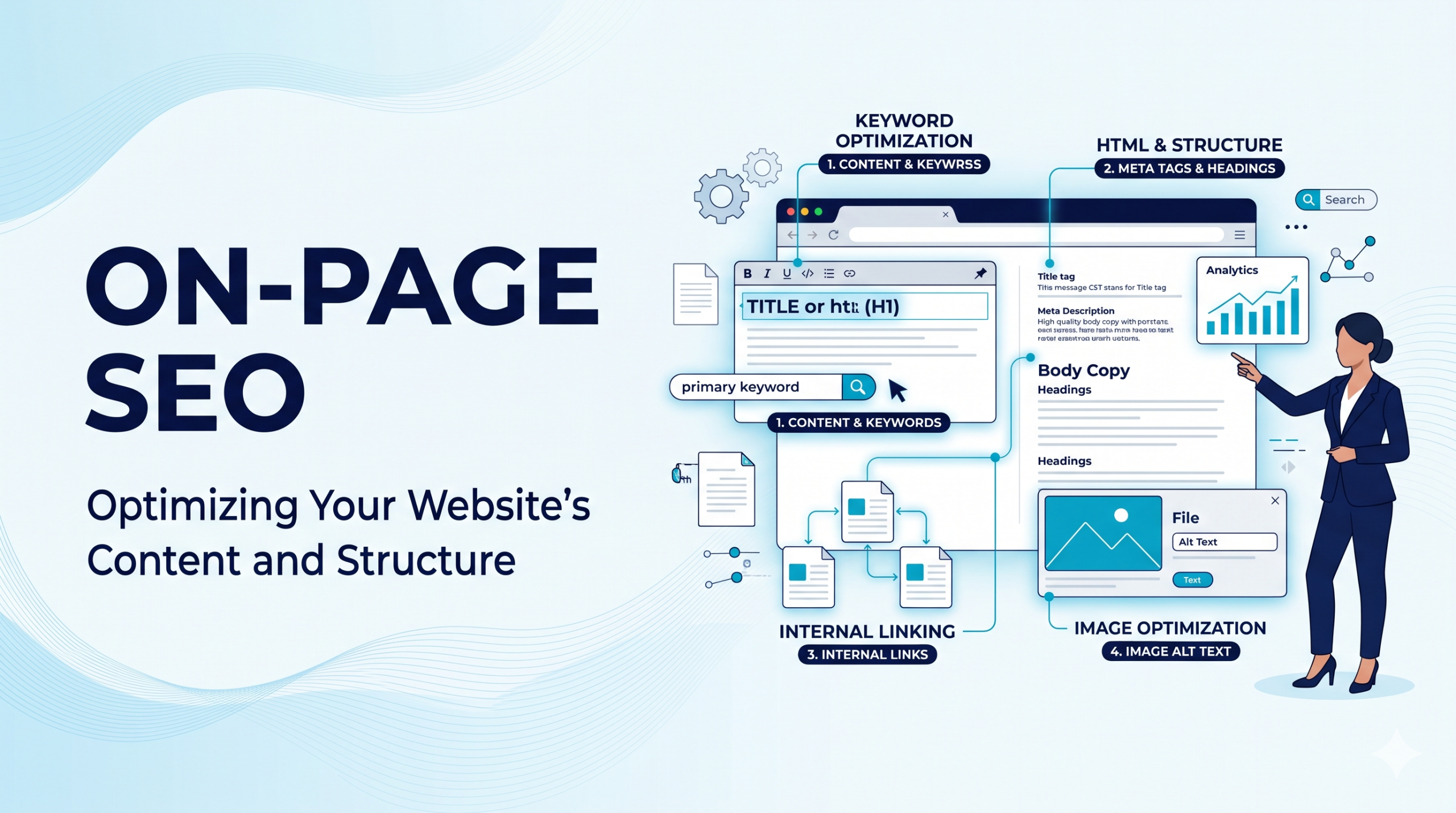
On-Page SEO is the strategic practice of optimizing individual web pages to achieve higher search engine rankings, attract qualified organic traffic, and deliver a seamless user experience. It focuses on refining elements directly within the website's code and visible content to align precisely with search intent. The foundation of on-page optimization begins with high-quality, comprehensive content that addresses the target audience's needs, integrated naturally with primary and semantically related keywords. Structural elements play an equally critical role: compelling meta titles and descriptive meta descriptions drive higher click-through rates from search results, while organized header hierarchies (H1, H2, H3) establish logical topical flow for both readers and search engine crawlers. Furthermore, internal linking connects contextually relevant pages to distribute link equity and guide visitors through the conversion funnel. Technical on-page components—such as descriptive, short URL slugs, descriptive image alt text for accessibility and image search, and clean media formatting—ensure pages remain easy to crawl and interpret. Modern search engines evaluate user engagement signals closely, making on-page SEO essential for reducing bounce rates, maximizing dwell time, and demonstrating E-E-A-T (Experience, Expertise, Authoritativeness, and Trustworthiness) directly on every live asset.
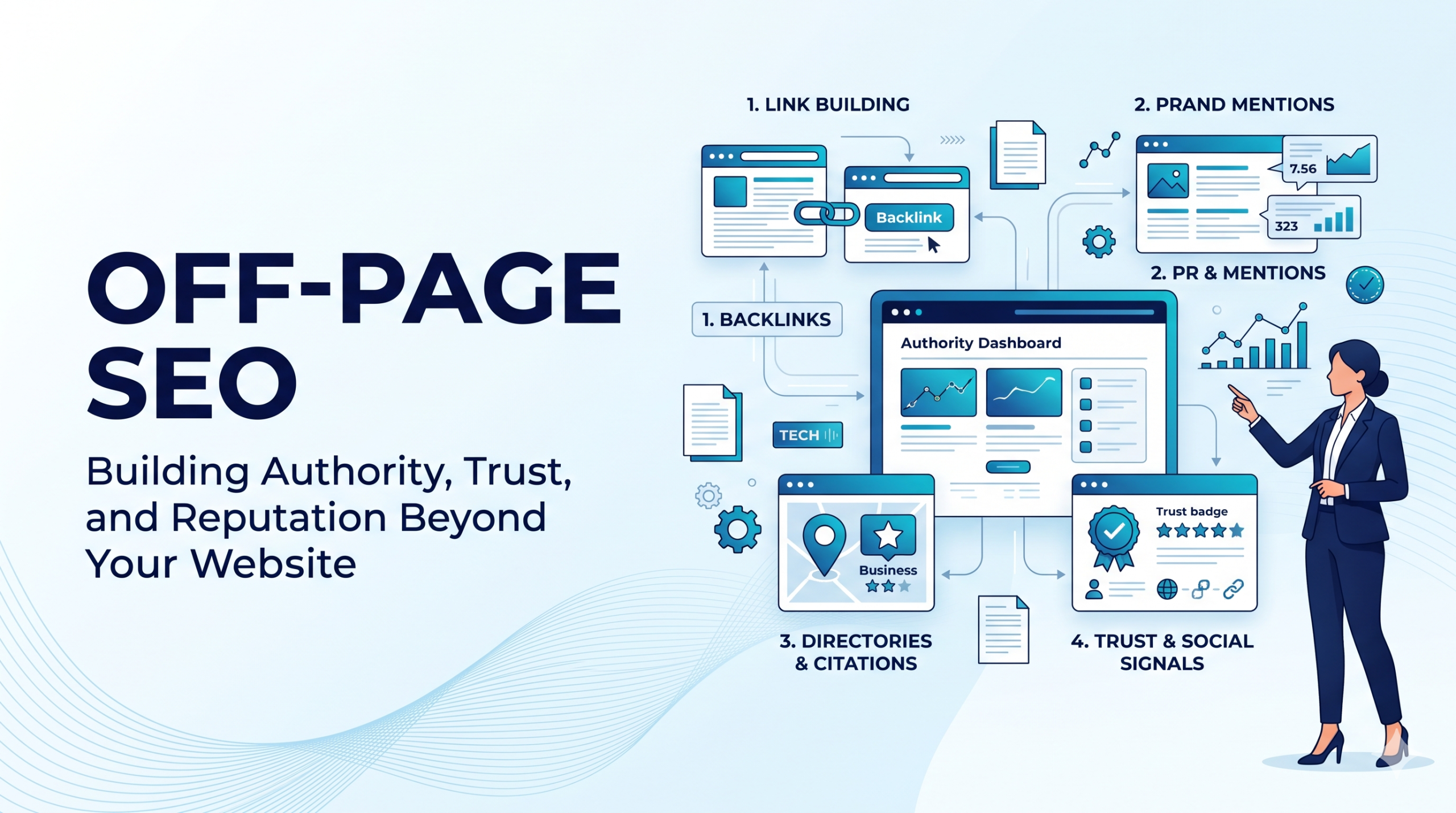
Off-Page SEO encompasses all strategic actions executed outside the boundaries of your own website to elevate domain authority, brand credibility, and search engine ranking positions. While on-page optimization refines your immediate content, off-page efforts serve as external votes of confidence from across the digital ecosystem. The cornerstone of off-page optimization is quality link building—securing natural, high-authority backlinks from reputable, contextually relevant publications via digital PR, guest thought leadership, and organic content sharing. Search algorithms interpret these inbound links as authentic endorsements of your site’s reliability and subject-matter expertise. Beyond backlink acquisition, effective off-page SEO incorporates brand mention management (both hyperlinked and unlinked), consistent citations across localized business directories (NAP consistency), and active engagement on key industry platforms. Cultivating positive customer reviews on platforms like Google, Trustpilot, and Yelp further signals trustworthiness, directly enhancing local and international organic visibility. Modern search engines heavily emphasize E-E-A-T (Experience, Expertise, Authoritativeness, and Trustworthiness); an intentional off-page strategy reinforces these criteria, demonstrating to algorithmic evaluators and human users alike that your brand is an established, peer-validated authority within your niche.
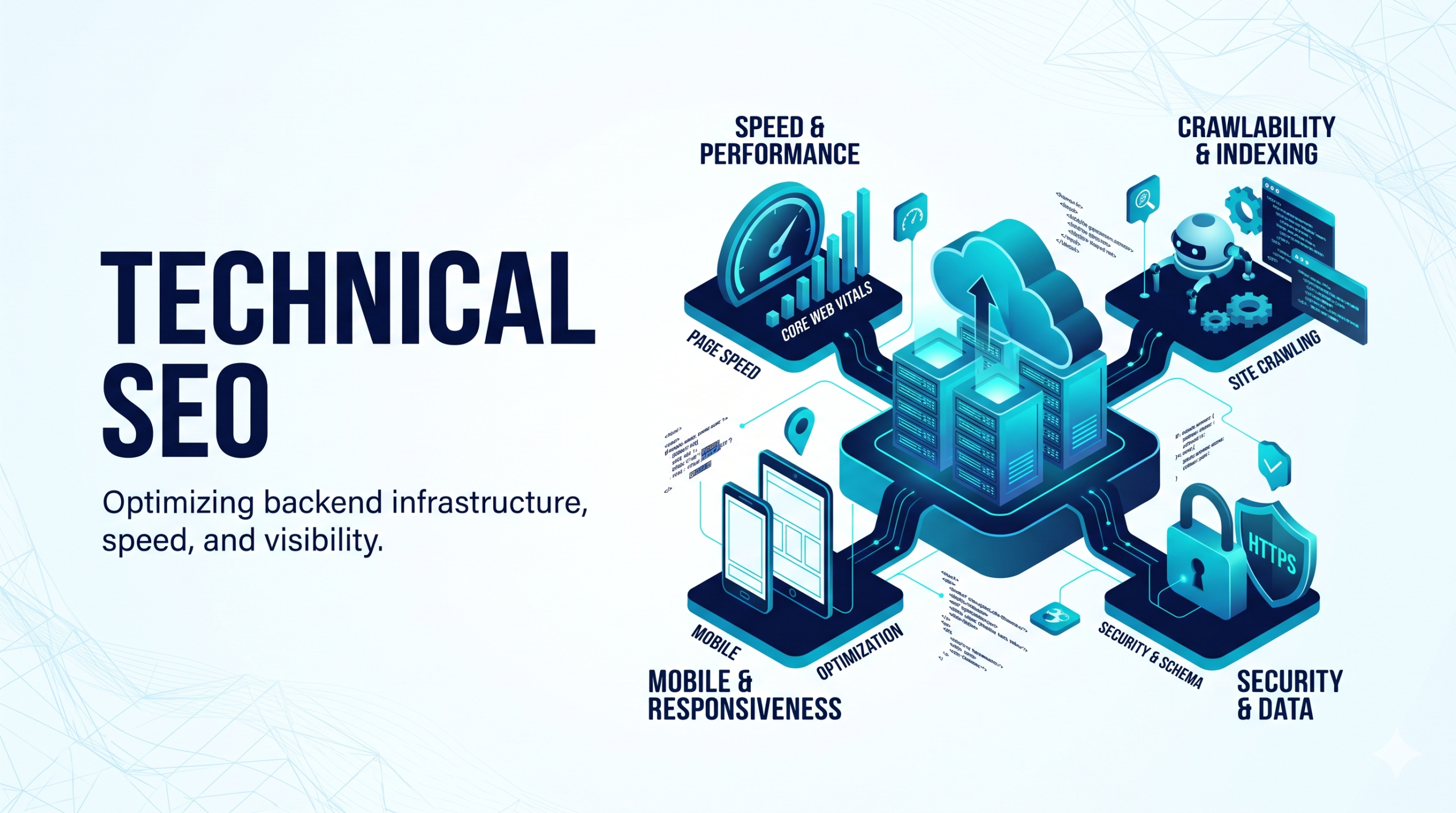
Technical SEO focuses on optimizing the underlying infrastructure and backend code of a website, ensuring search engine bots can efficiently crawl, interpret, render, and index its pages without friction. Rather than prioritizing direct content creation or external backlink profiles, technical SEO establishes the essential framework that makes organic visibility possible. Core technical initiatives begin with maximizing website speed and meeting Google’s Core Web Vitals benchmarks, reducing server response times (TTFB), compressing media assets, and minimizing render-blocking JavaScript and CSS. A sound technical setup also mandates mobile-first responsiveness, secure data transmission via HTTPS encryption, and clean site architecture that avoids duplicate content pitfalls through accurate canonical tags (rel="canonical"). Furthermore, technical specialists maintain optimized XML sitemaps to direct web spiders to vital URLs while configuring robots.txt directives to conserve crawl budget on irrelevant pages. Implementing structured data markup (Schema.org) translates content into machine-readable code, enabling rich snippets and prominent visibility in search features. Without a solid technical foundation, even exceptional on-page content and high-authority backlinks can fail to achieve viable rankings, as modern algorithms directly penalize unstable, slow, or poorly structured websites in user experience evaluations.
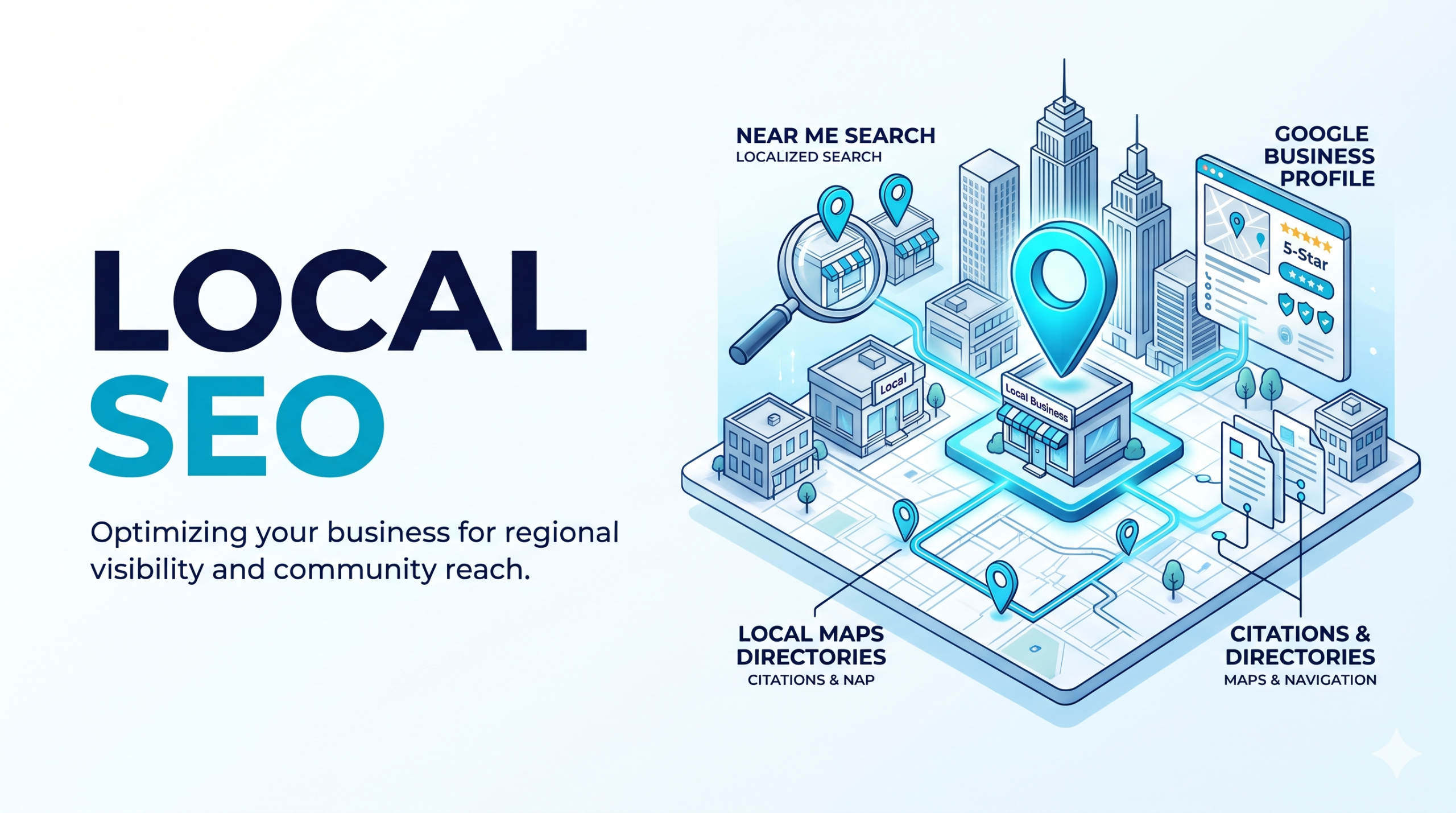
Local SEO is the strategic branch of search engine optimization engineered to elevate a business's visibility in geographically restricted search results, particularly for localized queries and "near me" searches. It enables physical storefronts and regional service providers to capture high-intent, immediate prospects at the precise moment they seek local solutions. At the center of local optimization is a fully configured and verified Google Business Profile (GBP), which directly influences visibility within the high-converting Google Maps "Local 3-Pack." Critical ranking factors include precise primary and secondary business categories, updated operating hours, localized product or service menus, and high-resolution geotagged imagery. Beyond profile management, local SEO demands strict consistency of your core business details—Name, Address, and Phone number (NAP)—across reputable web directories, aggregators, and industry platforms. Additionally, algorithmic ranking signals heavily weigh customer sentiment: consistently earning, monitoring, and professionally responding to authentic customer reviews builds authority and consumer trust. Paired with localized website content, dedicated geographic landing pages, and regional backlinks from chambers of commerce or community publications, local SEO transforms proximity and regional relevance into steady foot traffic, direct phone calls, and sustainable local market dominance.
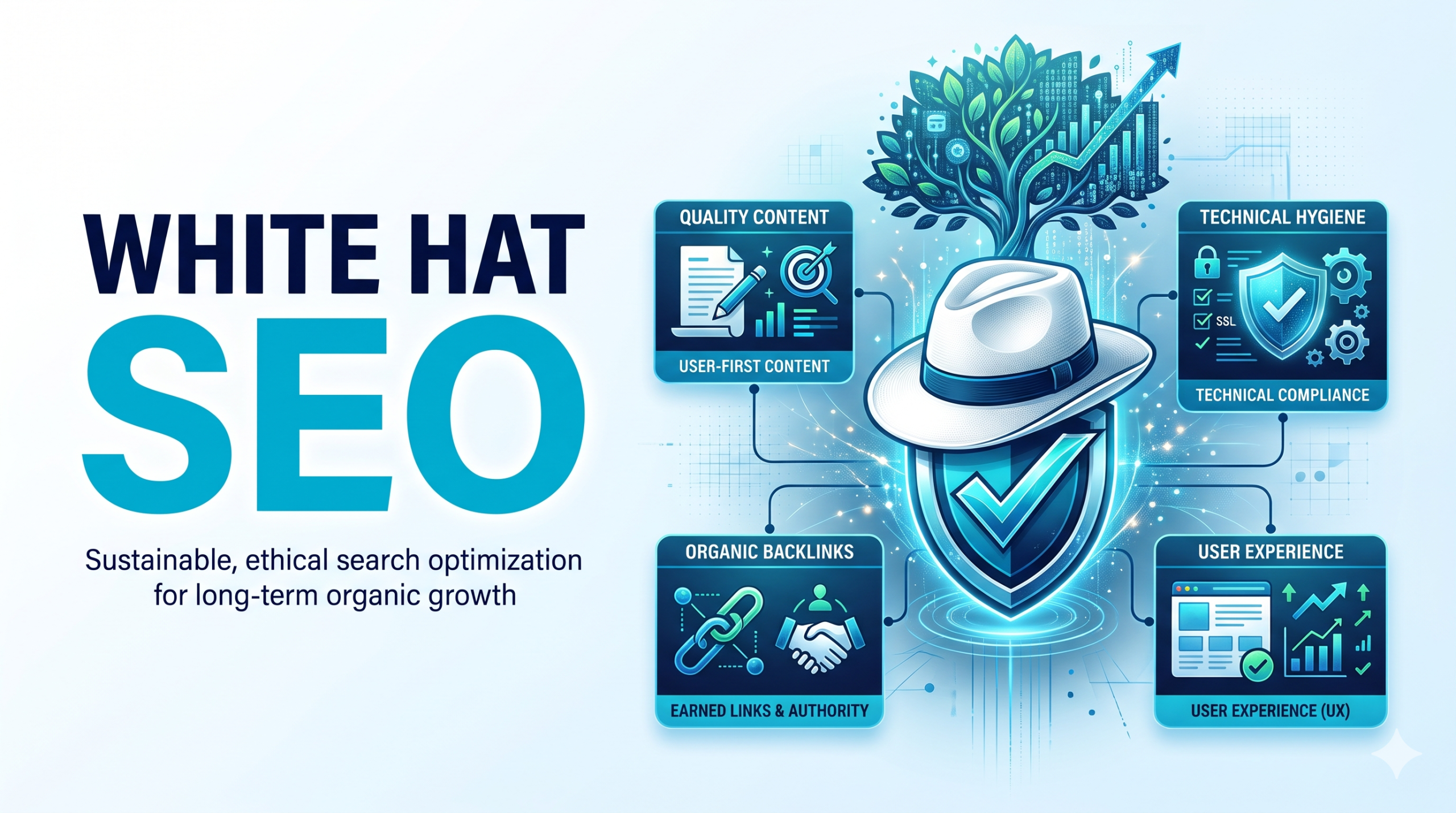
White-Hat SEO is the practice of optimizing a website using ethical, search-engine-approved methodologies focused entirely on delivering genuine human value and creating a sustainable, long-term digital presence. Strictly adhering to official search engine webmaster guidelines, such as Google's Search Essentials, white-hat strategies avoid manipulative shortcuts in favor of sustainable organic growth. At its core lies the creation of authoritative, user-first content that thoroughly answers search intent, demonstrates authentic E-E-A-T (Experience, Expertise, Authoritativeness, and Trustworthiness), and incorporates semantically relevant keywords naturally. Complementing content excellence is robust technical hygiene: maintaining rapid page load speeds, mobile responsiveness, secure HTTPS architecture, clean site navigation, and structured schema markup to facilitate seamless bot crawling and indexing. Furthermore, off-page authority is cultivated organically through editorial backlink earning—attracting genuine citations, digital PR mentions, and partner links through industry thought leadership and original research rather than transactional link schemes. By aligning directly with search engine algorithms designed to reward exceptional user experience and credible information, white-hat SEO shields websites from algorithmic penalization, ensures steady traffic compounding over time, builds enduring brand equity, and reliably drives qualified conversions without jeopardizing corporate reputation.
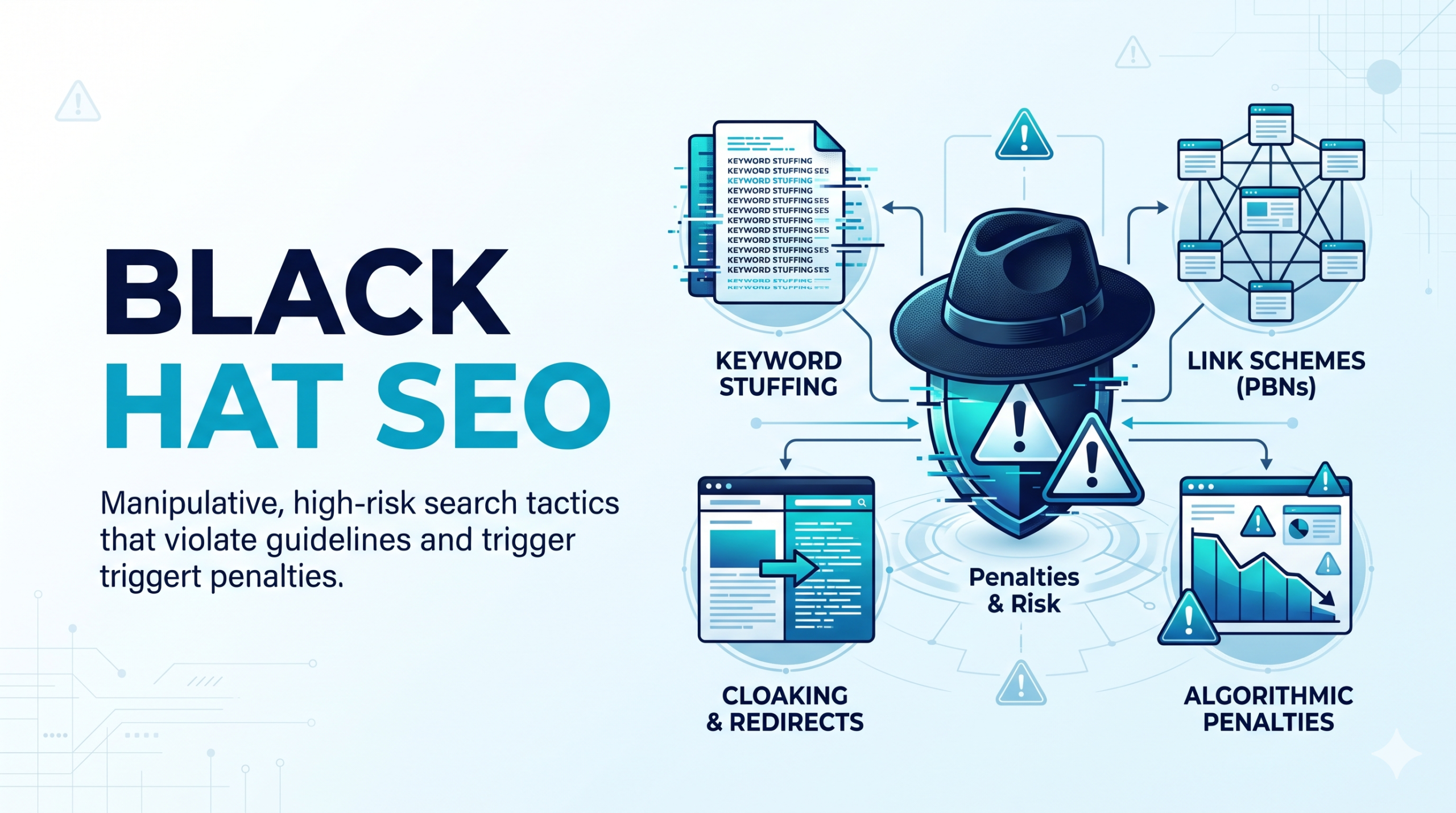
Black-Hat SEO refers to a set of aggressive, manipulative practices that intentionally exploit loopholes in search engine algorithms to gain rapid, deceptive organic rankings in direct violation of webmaster guidelines. Rather than prioritizing user value, human experience, or legitimate content quality, black-hat tactics focus entirely on tricking search engine crawlers into viewing a page as authoritative and relevant. Common black-hat methodologies include keyword stuffing (unnaturally cramming exact-match phrases into text or hidden code), cloaking (displaying one set of content to search bots while presenting another to human visitors), and deploying deceptive redirects. On the authority side, practitioners construct or buy access to private blog networks (PBNs) and engage in paid link schemes to generate synthetic backlink profiles with keyword-rich anchor text. Automated scraping and low-quality spinning tools are also frequently used to churn out duplicate or irrelevant content at scale. While these deceptive methods can occasionally trigger short-term ranking spikes, search engines employ sophisticated AI detection models, such as Google’s SpamBrain, to identify anomalous patterns. Once detected, targeted websites face devastating algorithmic demotions or complete de-indexing penalties via manual actions, resulting in the sudden destruction of organic traffic, irreversible domain reputation damage, and severe commercial losses.
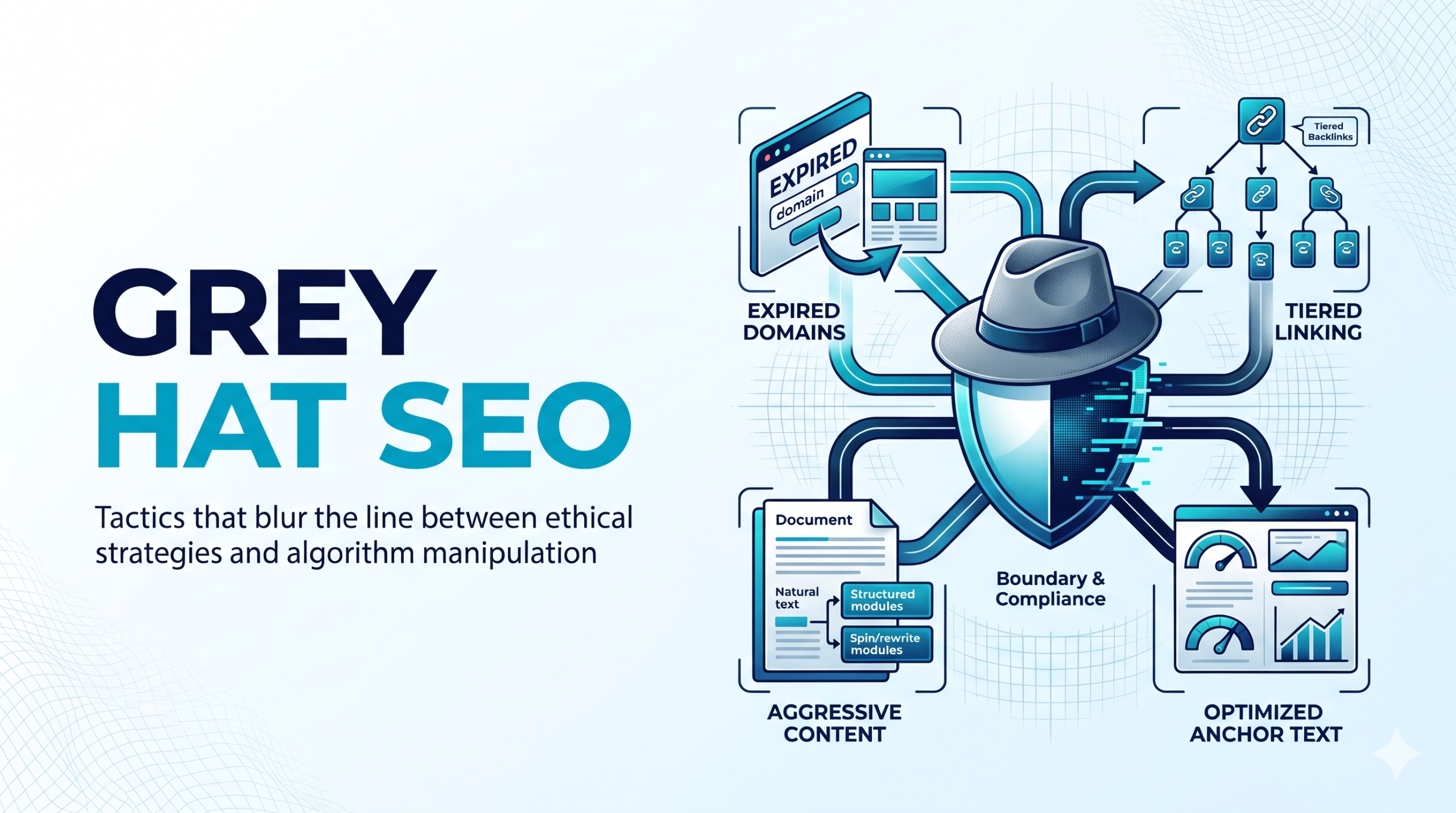
Grey-Hat SEO is a digital optimization methodology that operates in the ambiguous boundary between ethical, search-engine-approved white-hat practices and guideline-violating black-hat manipulation. Rather than strictly adhering to Google's Search Essentials or committing blatant violations that trigger immediate manual penalties, grey-hat practitioners exploit algorithmic gray areas, technical ambiguities, and delayed enforcement windows to achieve faster rankings without obvious footprint detection. Common grey-hat tactics include purchasing expired, high-authority domains and executing 301 redirects to pass legacy backlink equity to a new target site, using private link exchanges that bypass automated detection, or orchestrating tiered link structures where lower-tier networks feed authority into clean web properties. Practitioners may also push commercial anchor-text ratios to the edge of safety thresholds, deploy AI-assisted content spinning with light editorial polish to produce high volumes of landing pages, or incentivize customer reviews without explicitly violating disclosure laws. While grey-hat SEO can yield significant ranking advantages and quicker commercial gains than purely organic methods, it carries substantial dormant risk: as search engine algorithms like Google's SpamBrain continuously update and refine semantic pattern recognition, today's borderline grey-hat loophole frequently becomes tomorrow’s penalized black-hat violation, making long-term stability uncertain.